Marathon Coach
The World's Largest Luxury Bus Converter
Coburg, OR • Est. 1983Since 1983, Marathon Coach has defined the standard for luxury Prevost conversions. From their custom-built facility in Oregon's Willamette Valley, they have produced over 1,420 coaches, each representing more than 10,000 hours of skilled craftsmanship.
If you've been to a Prevost rally in the last decade, you've noticed the pattern: when experienced owners talk about converters, Marathon comes up first. There's a reason for that. Since 1983, they've completed over 1,400 conversions from their 160,000-square-foot facility in Coburg, Oregon. That means there are more Marathon conversions on the road than any other Prevost conversion, by a wide margin. This volume translates to institutional knowledge that shows up in the details—the way a slide room seals, how the electrical system handles shore power transitions, where to route plumbing to prevent freeze-ups when you're chasing that early spring rally in New Mexico.
The Numbers
New builds start around $3 million for an H3-45 double-slide. Marathon builds on both the X3-45 chassis and the H3-45 chassis, giving buyers the choice between the two Prevost platforms depending on their preferences. The H3-45 quad-slide configurations—what most buyers ordering today are specifying—land between $3.2 and $3.8 million depending on floor plan and options. If you've owned a Prevost before, you already know what the delta buys you: the 500hp Volvo D13 paired with an Allison B500, the air-ride suspension that makes a 45-foot coach handle like something half its size, and construction that's engineered for a million-mile service life.
The pre-owned market is where Marathon's volume becomes your advantage. They maintain their own inventory of trade-ins, and because they've built so many coaches, well-maintained examples regularly come available.
Experience Marathon Coach
When I bought my first Marathon coach in 1990, I was so impressed with the quality that I ended up buying the company. That commitment to excellence hasn't wavered in the decades since.
The Schoellhorn Story
In 1990, Bob Schoellhorn—who'd just retired as CEO and Chairman of Abbott Laboratories—bought a Marathon coach. Two years later, he began acquiring the company, reaching sole ownership by 1994. That's either the most expensive impulse purchase in RV history or the kind of due diligence you'd expect from someone who ran a Fortune 100 company.
Under his leadership, Marathon invested in facility and workforce at a pace the industry hadn't seen. The company grew from a respected regional converter to the dominant player. His corporate background brought systems thinking to what had been a craft operation—without sacrificing the craftsmanship itself. Ask anyone who's toured the facility: Marathon builds coaches the way Boeing used to build airplanes, with process discipline that ensures consistency across 10,000+ hours of build time.
Why Oregon Matters
Marathon's Pacific Northwest location isn't accidental. The region has a deep bench of skilled woodworkers—a legacy of the cabinet and millwork industries that have operated here for generations. Inside the factory, cabinetry is built using laminate over precision plywood cores rather than field-finished hardwood. The finish is applied during manufacturing, creating panels that remain stable and consistent regardless of the climate where the coach ultimately travels.
The Marathon Coach Interior
Living Space
Master Suite
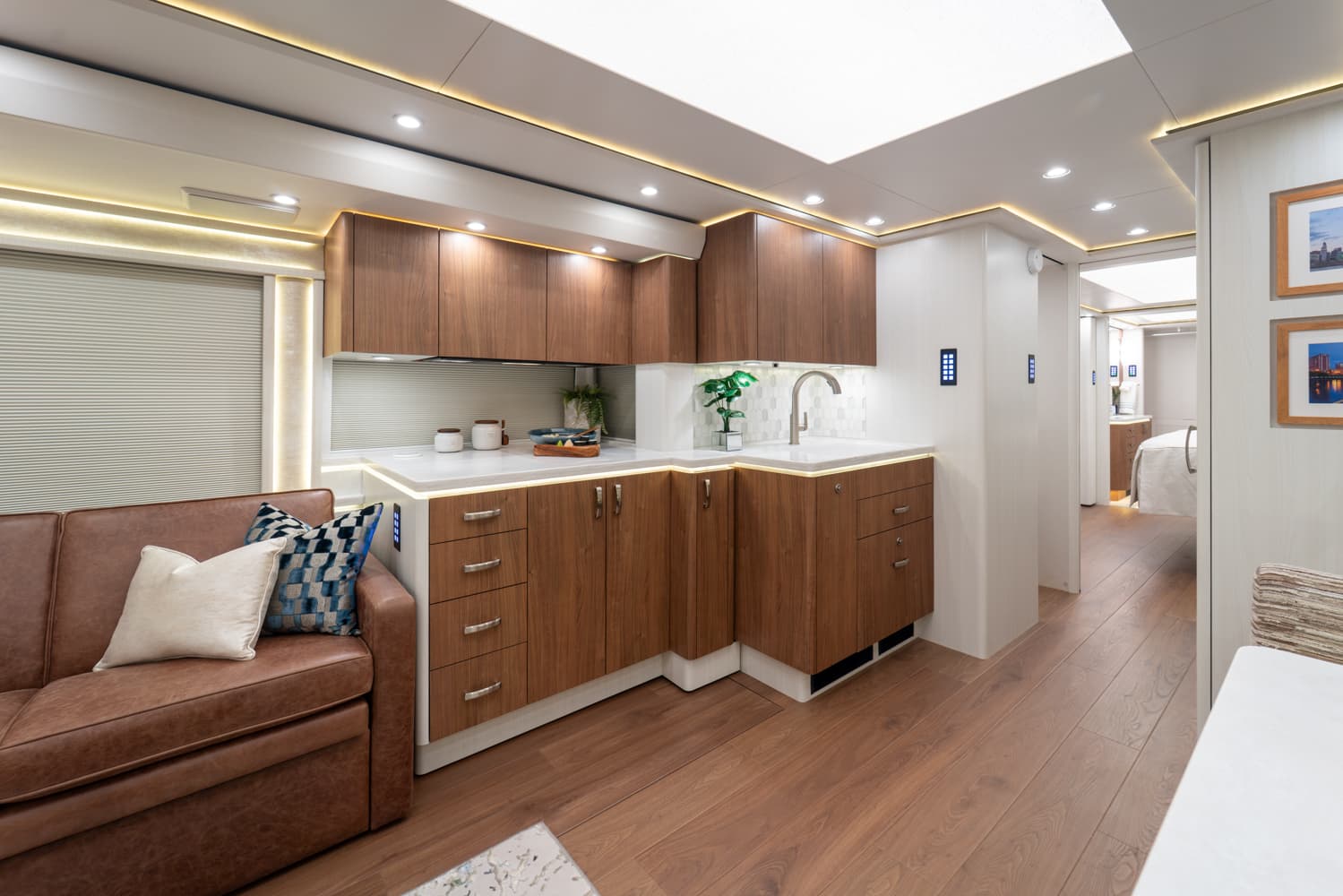
Galley
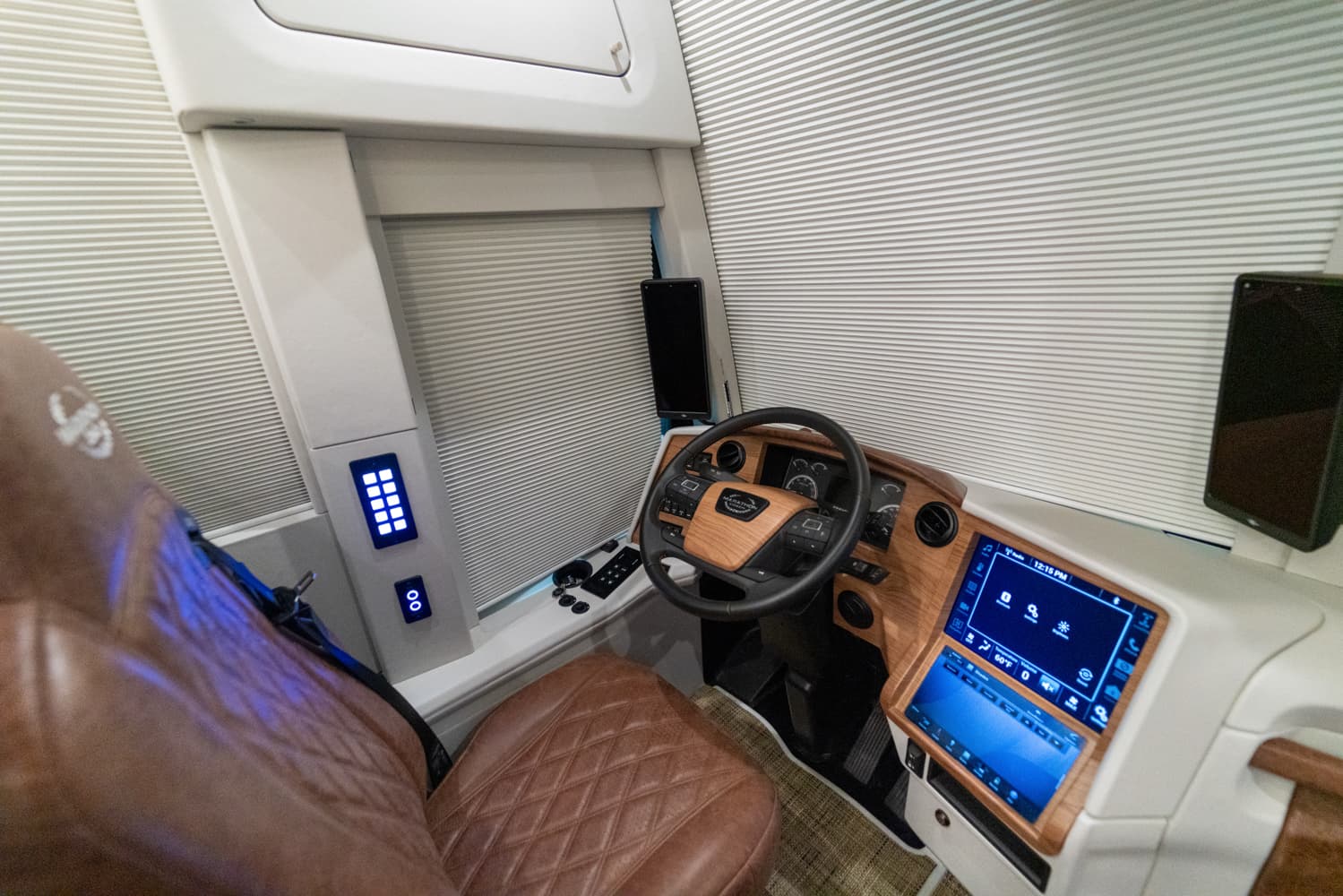
Cockpit
Inside a Marathon
Step into a Marathon with the slides extended and you'll understand why owners rarely go back to anything else. It's not just the square footage. It's how the space is organized. Furniture scale, clear sightlines from front to back, and layouts designed to keep the interior feeling open rather than crowded. Much of the work that makes this possible happens behind the scenes. Marathon's engineering team focuses on how every system, cabinet, and structural component is integrated so the living space feels effortless once the coach is opened up.
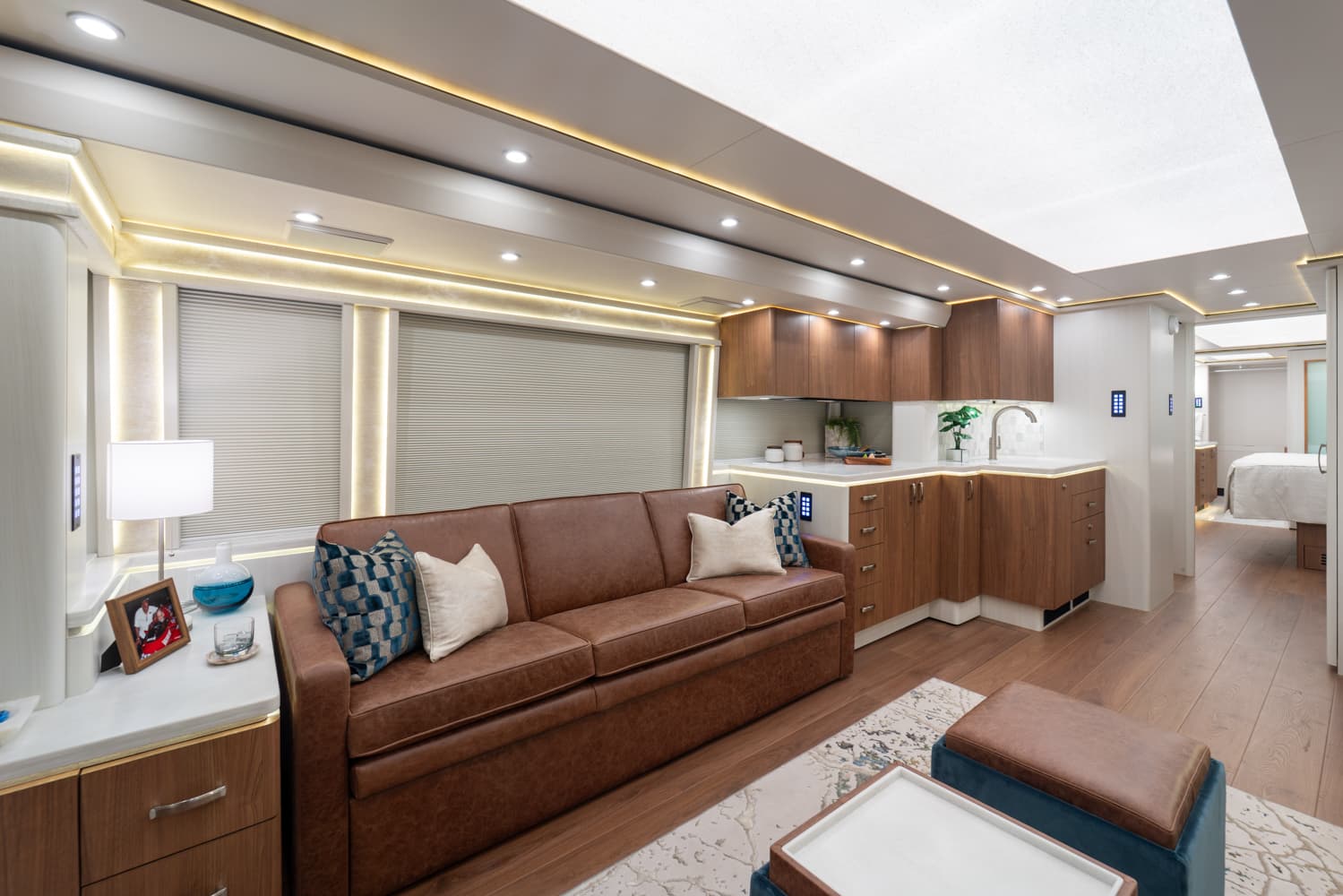
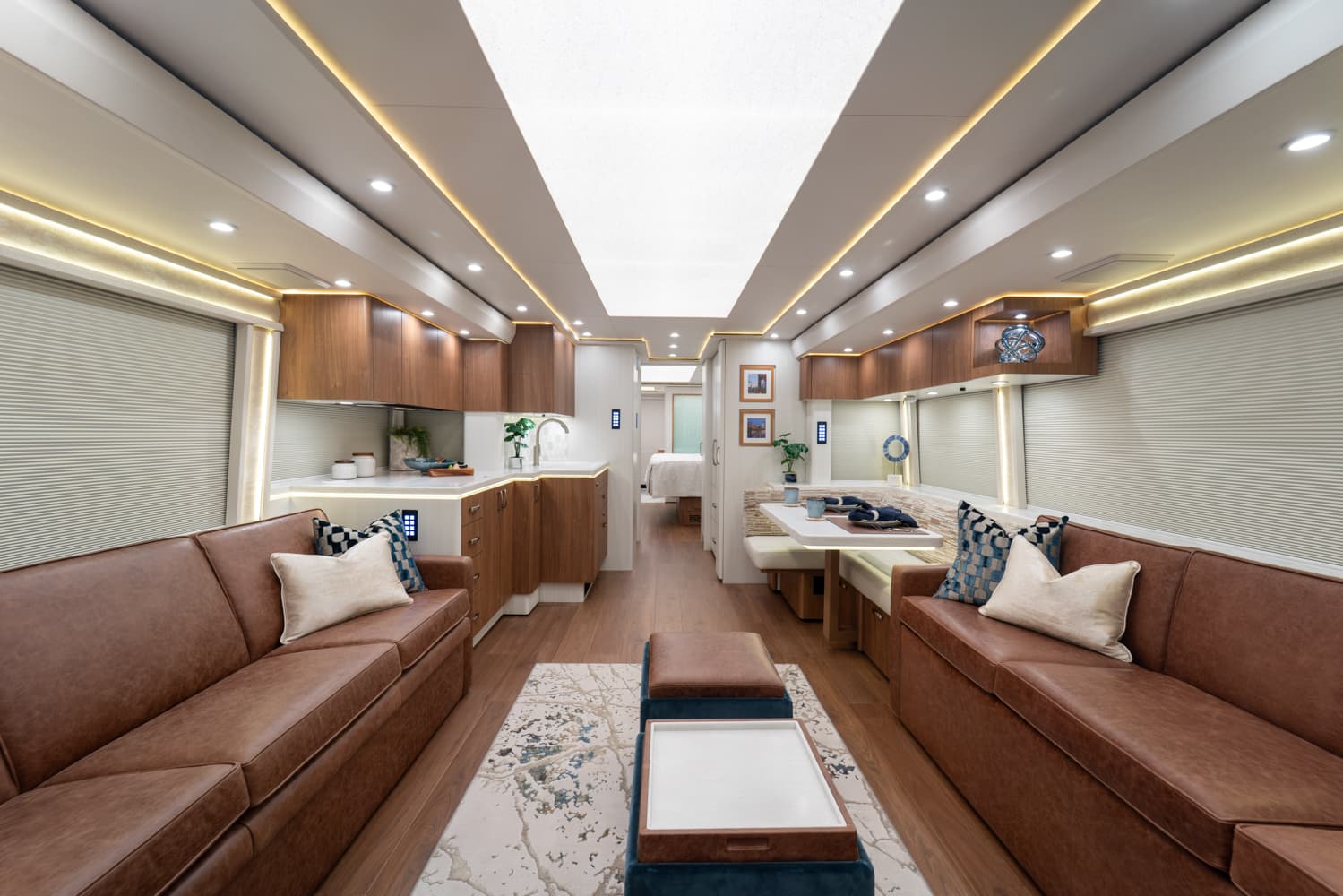
The aesthetic leans toward what you might call "understated affluence." Textured wood-grain laminates in an endless variety of tones paired with leather seating, durable solid-surface countertops, and understated metal accents that emphasize craftsmanship over flash. If you've spent time in first-class airline lounges or boutique hotels, you'll recognize the design language. It's luxury that doesn't announce itself.
The living area typically features opposing slide rooms that create a genuine great room when extended. Most builds include some combination of recliners, a sofa, and often a dinette that converts if you're hosting guests. Entertainment systems are comprehensive—large displays, premium audio, satellite connectivity—but integrated rather than dominant. You're not living in a home theater; you have a home that includes one.
The galley gets serious attention because Marathon understands that owners actually cook. Full-size residential refrigerators, convection microwave ovens, induction cooktops, and solid-surface counters that would anchor any high-end kitchen. Storage is abundant and actually usable—pullout drawers and custom organizers that someone thought through.
The Master Suite
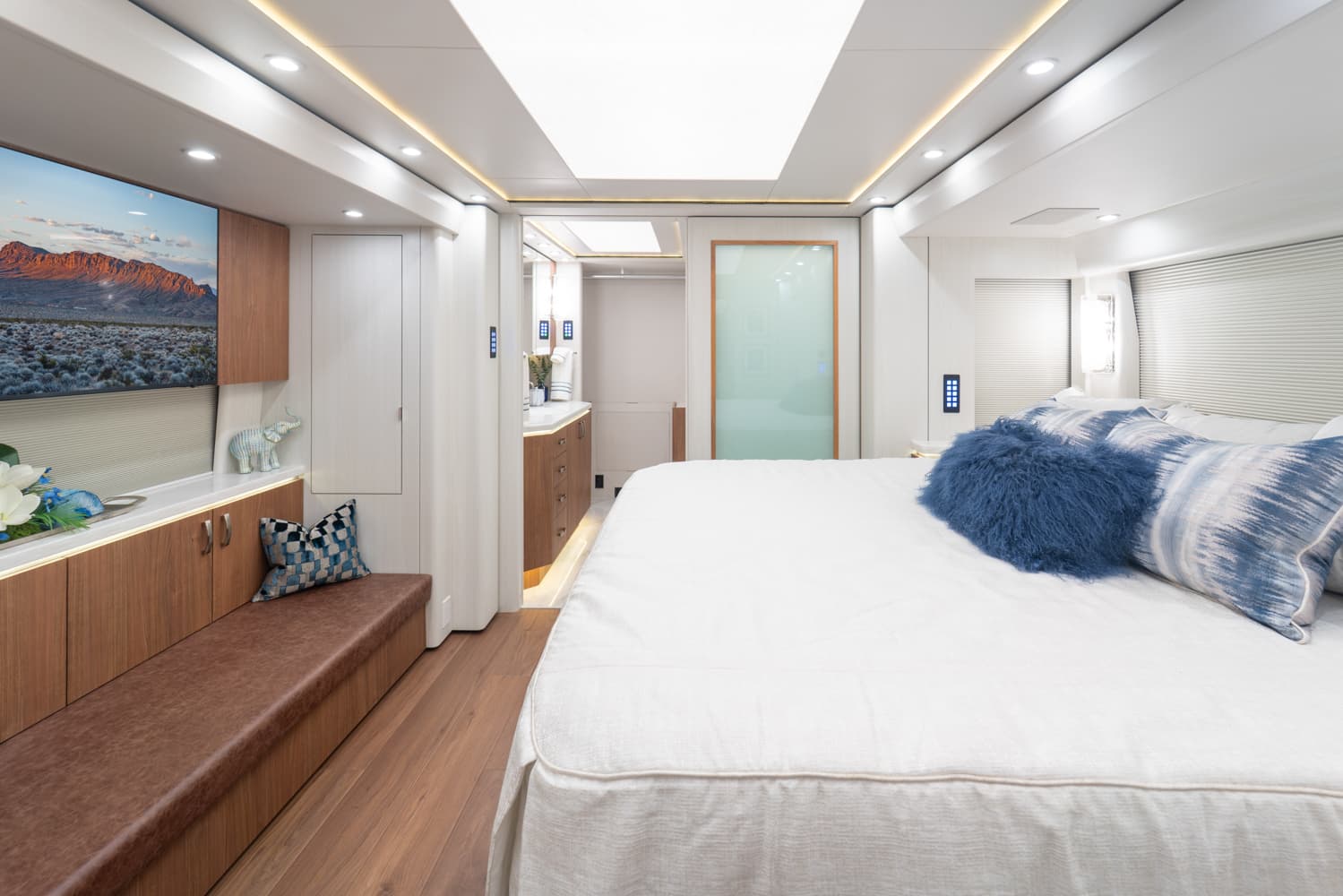
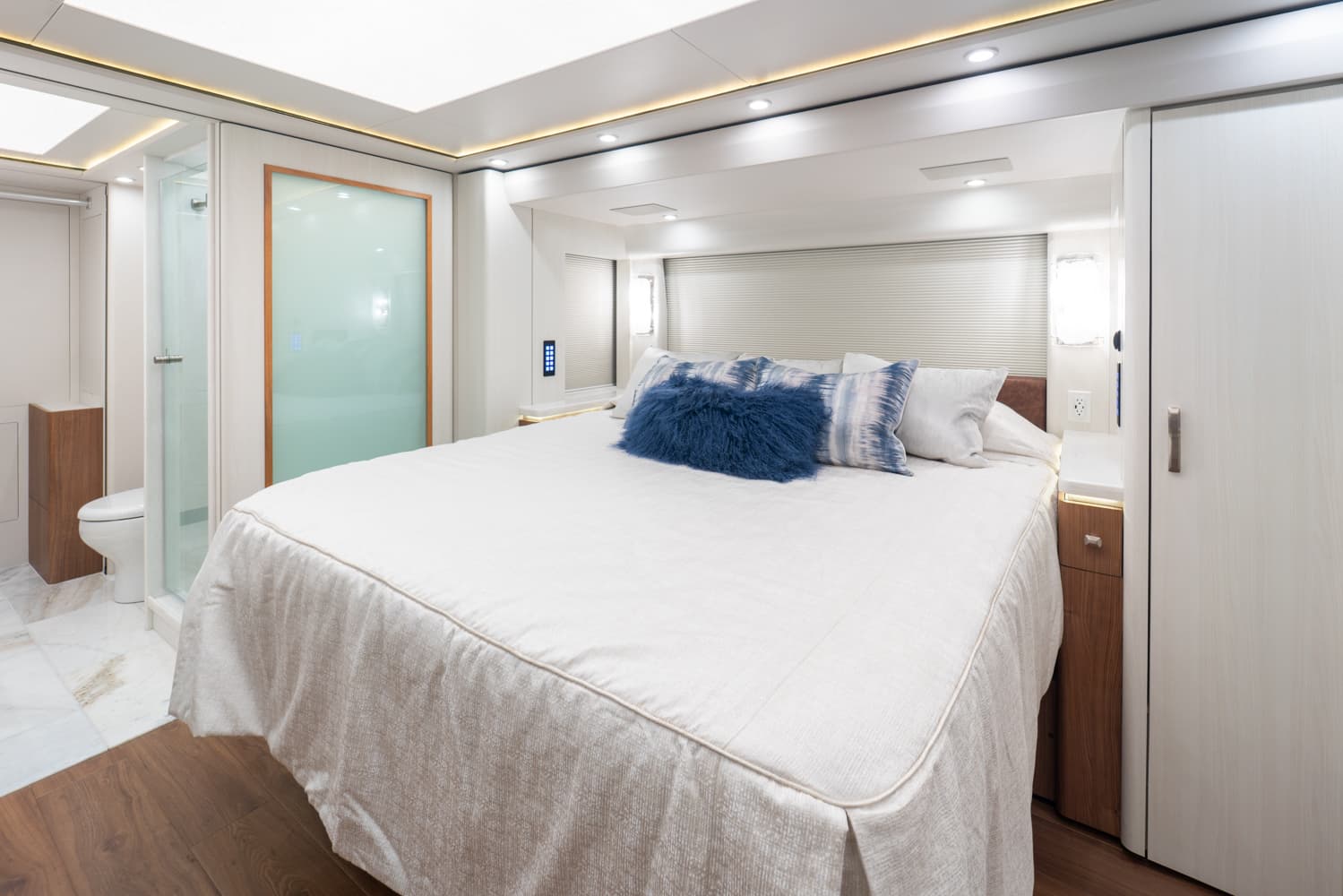
The rear of a Marathon is where "luxury coach" stops being a category and starts being a statement. King-size beds are standard, with custom mattresses selected for road travel. You'll sleep better here than in most hotels, which becomes relevant around your fourth rally of the season.
Wardrobe space rivals a walk-in closet, with modular plans that maximize storage in a footprint that physics would seem to prohibit. Master bathrooms feature full-size showers with glass enclosures, porcelain toilets (if you've used a plastic RV fixture, you understand the significance), and vanities with solid-surface counters. Some builds include separate his-and-hers vanity areas—a detail that seems excessive until you're both getting ready for a rally banquet.
Marathon Coach Paint & Design
The Exterior
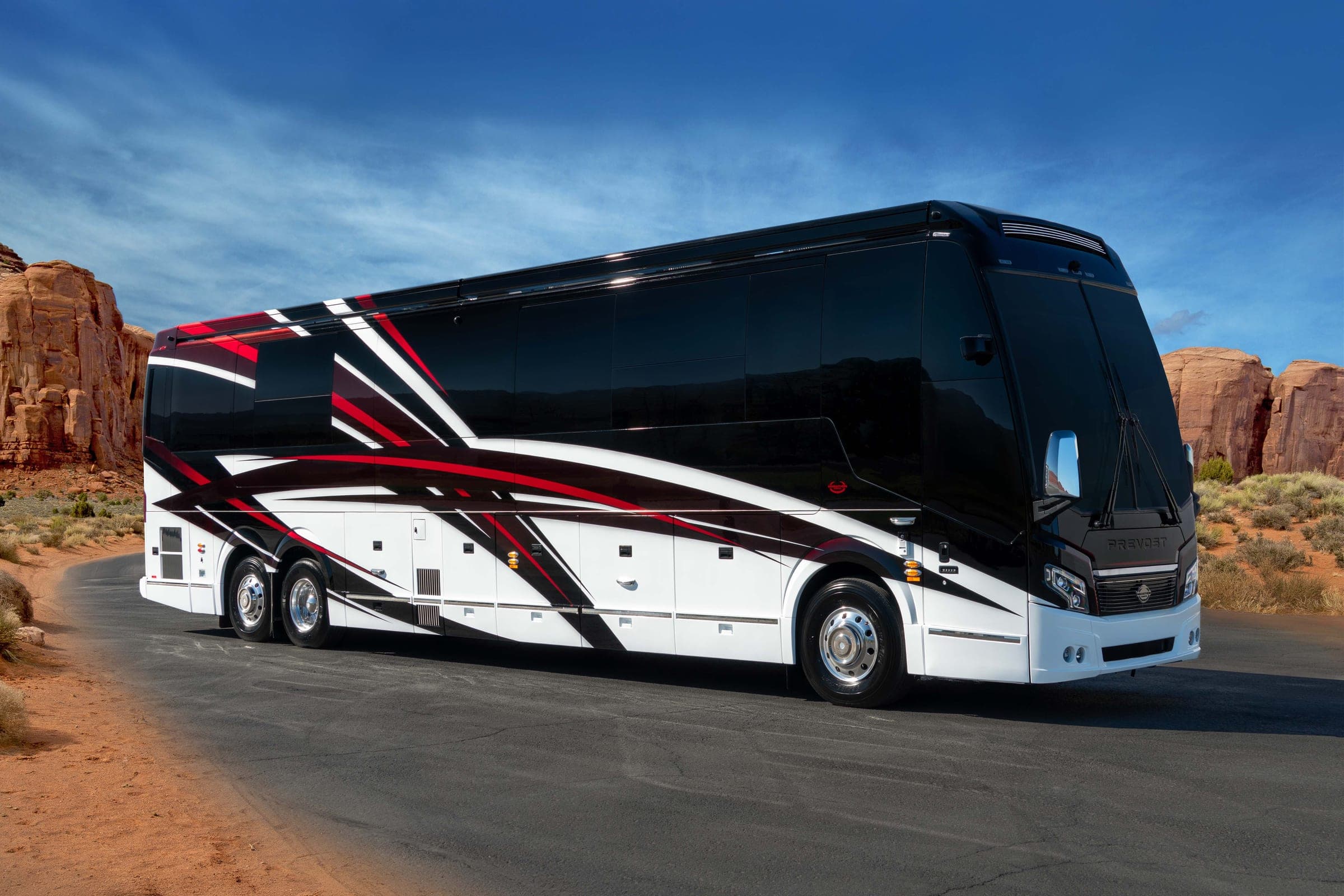
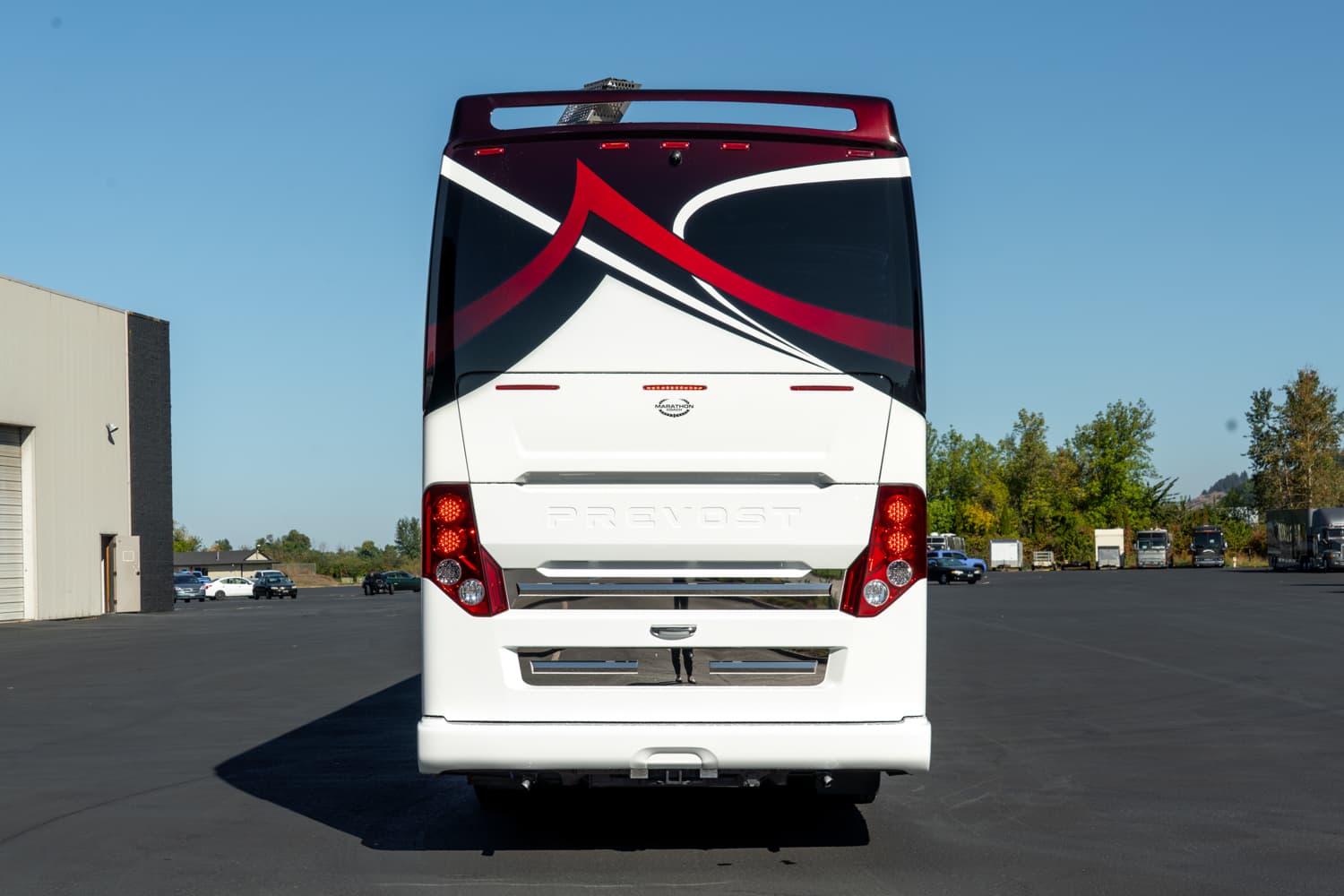
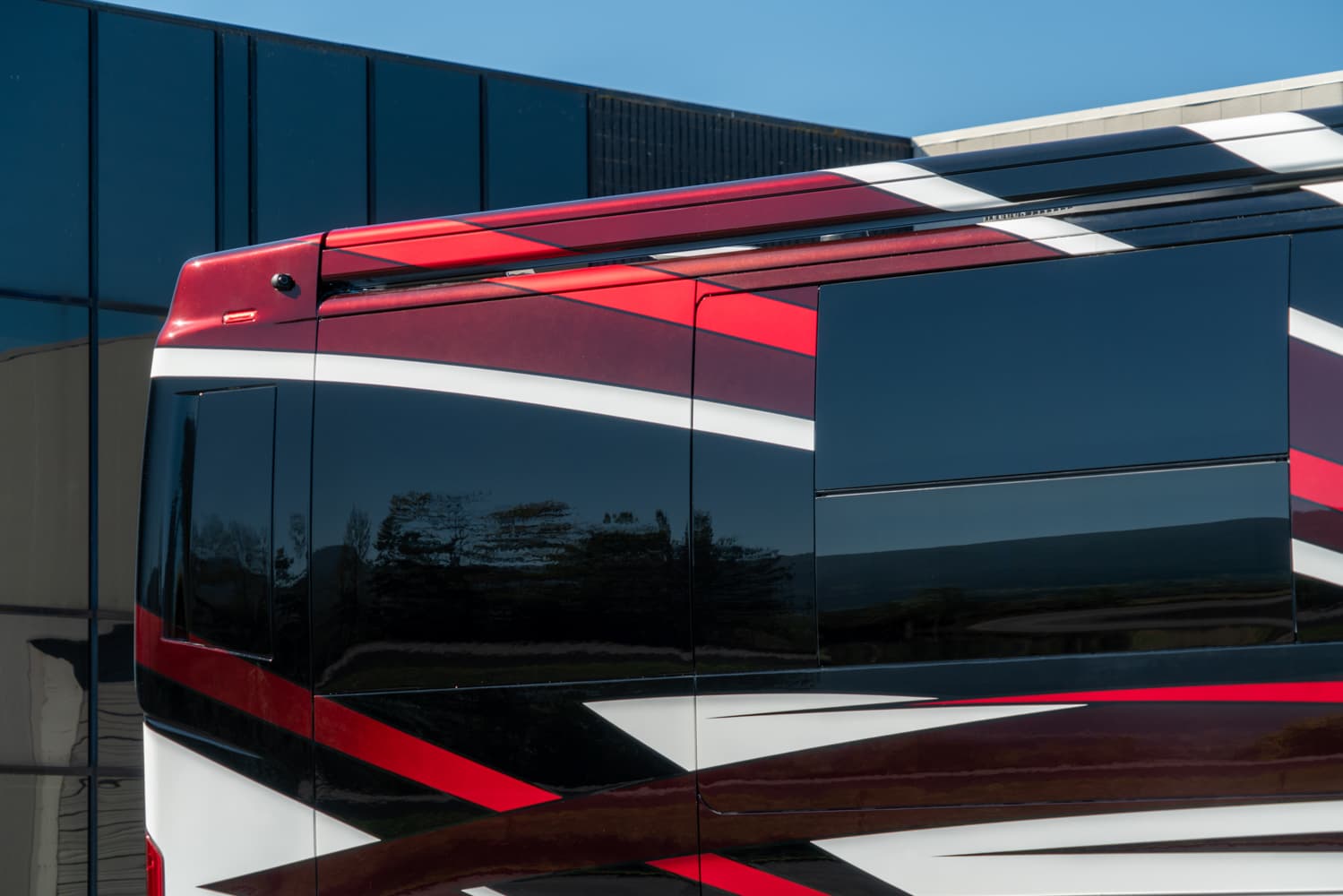
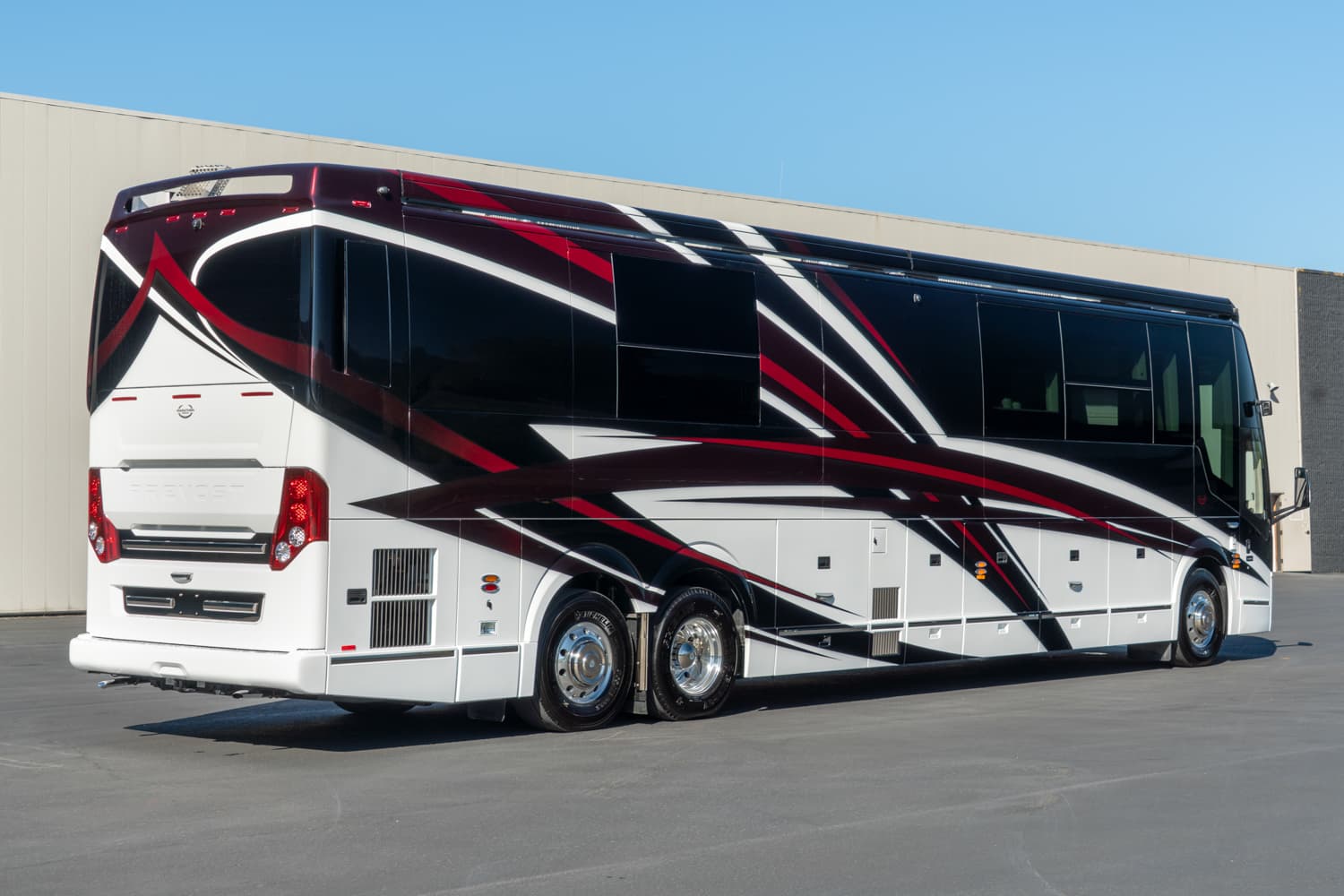
You can identify a Marathon from across a parking lot without seeing the nameplate. The paint schemes tend toward sophisticated two- and three-tone combinations: deep navy with silver accents, champagne metallics over cream, burgundy fading to black. Shaded graphics and accents seem to leap off the coach, and more detail is revealed the closer you get.
Marathon is the only converter with a paint shop under the same roof as the production facility, with two full-time paint designers. This means you get to customize your exterior from front to back, allowing you to lead the design—an experience you won't find anywhere else.
What the exterior really reveals is the quality underneath. Door seals sit flush. Compartment doors align precisely. Awnings extend and retract without drama. These details might seem minor until you've dealt with a coach that lacks them.
The Design Philosophy
What makes Marathon styling hold up over time? Restraint. They design for twenty-year ownership, not twenty-day showroom impressions. The interiors you see on decade-old Marathons still look current because they never chased trends in the first place.
This philosophy extends to technology. Marathon adopts new systems after they've proven themselves elsewhere, not before. You won't find bleeding-edge tech that might lack parts support in five years. Instead, you'll find robust, proven solutions that work reliably.
The Community
Marathon hosts annual owner rallies that draw Marathon Coach Club members to interesting locations all over the continent. If you haven't attended one, put it on your calendar. But it's the relationships that keep people coming back. The couple you met at your first rally who taught you about winterizing. The guy who showed you his solar setup that inspired yours. This isn't marketing—it's what ownership looks like when a company invests in community.
The service network matters too. Marathon Coach owns three authorized service and sales centers that span the country, positioned to handle warranty work, maintenance and upgrades wherever your travels take you. When you're at a rally in Florida and something needs attention, that infrastructure is the difference between an inconvenience and a crisis.
Begin Your Journey
Connect with Marathon Coach to explore the possibilities of luxury coach ownership.